Choosing Meaningful Inscriptions for an Islamic Headstone
Thoughtful words, Arabic calligraphy and personal touches to honour a loved one.
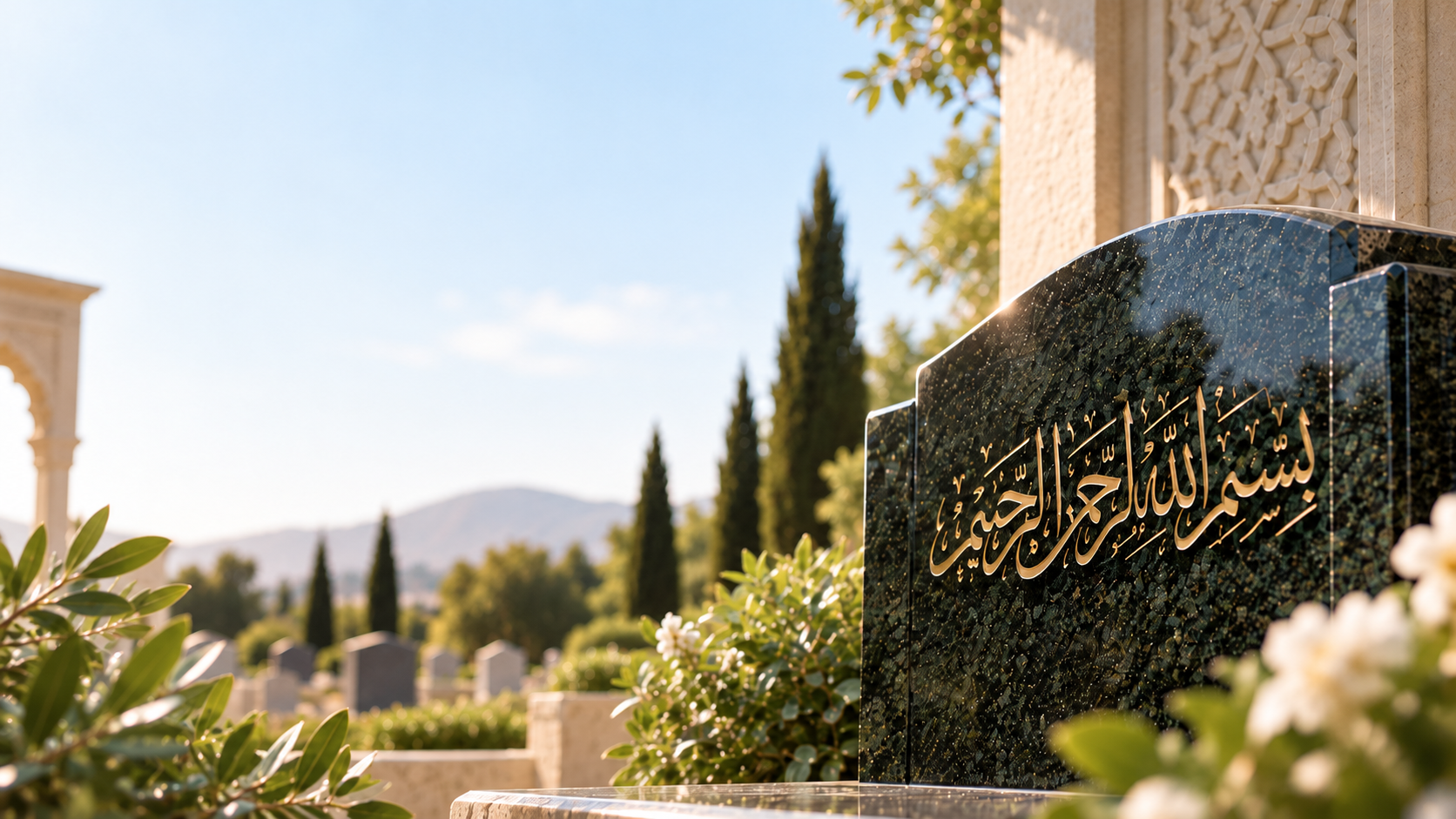
Choosing Meaningful Inscriptions for an Islamic Headstone
Choosing an inscription for an Islamic headstone is a deeply personal part of creating a memorial. Alongside the name and dates of a loved one, families may choose Arabic calligraphy, meaningful Islamic phrases and Quranic verses that reflect faith and remembrance.
With several elements to consider, understanding the available options can help families create a memorial that feels balanced, respectful and personal.
Choosing Arabic Calligraphy
Arabic calligraphy can form an important part of a Muslim headstone, bringing together meaningful words and traditional Islamic artistry. Different calligraphy styles can also give the memorial a noticeably different character.
At Islamic Memorials, families can explore a range of Arabic calligraphy styles, including Naskh, Thuluth, Maghribi and several Kufic-inspired styles. Some have flowing and decorative forms, while others offer a cleaner or more geometric appearance.
The chosen style can be considered alongside the headstone design, granite colour and other details so that the different elements of the memorial complement one another.
Selecting Meaningful Words and Verses
The meaning of an inscription is just as important as its appearance. Islamic memorials may incorporate familiar phrases such as Bismillah, the Shahada and Inna Lillahi, while Quranic content can also feature within back-panel artwork.
Taking time to understand the meaning behind memorial verses can help families make an informed choice about what they would like to include.
Names, dates, English wording and Arabic text should also be carefully checked before the memorial enters production.
Bringing the Memorial Together
An inscription is one part of the overall memorial. Its calligraphy, positioning and wording can be considered alongside the stone colour, shape and other design details to create a cohesive tribute.
The same thoughtful approach can be taken when considering an Islamic kerb set, where the headstone and surrounding memorial elements form part of the overall design. Cemetery requirements should always be considered, as alterations such as kerb sets and borders may require approval from the relevant cemetery authority.
Ultimately, creating a personalised Islamic memorial is about bringing these individual choices together in a way that respectfully honours the memory of a loved one.